

Where Steel Meets Silicon, and Innovation Soars
Imagine a symphony of steel and precision, not just orchestrated by human hands, but by the silent, intelligent hum of integrated circuits and data streams. For decades, the construction lifting industry was a realm of brute force, sweat, and sheer mechanical might. But in the last five years, a seismic shift has occurred, pulling this traditional sector into the 21st century. We’re not just talking about bigger cranes; we’re witnessing a revolution where steel meets silicon, and the very act of lifting becomes an intelligent, thought-provoking dance between human ingenuity and artificial intelligence.
This isn’t merely an upgrade; it’s a profound reimagining of how we build, driven by three powerful currents: the ubiquitous embrace of smart technology, the relentless march of automation, and an urgent, non-negotiable commitment to sustainability. Gone are the days of blind lifts and unpredictable delays. Welcome to the era of predictive power, pinpoint accuracy, and a cleaner conscience.
Let’s pull back the curtain and see how this dramatic leap is reshaping each vital player in the construction lifting ensemble:
Cranes: The Sentinels of the Skyline, Now with Brains

Once, these towering giants were solely dependent on the keen eye and steady hand of their operators. Today, they are sentinels of the skyline, equipped with brains.
Picture this: a colossal tower crane, not just moving steel, but thinking. Thousands of IoT sensors are its nervous system, constantly relaying real-time data – the subtle groan of a cable, the whisper of the wind, the precise weight threatening its mighty arm. This isn’t just information; it’s a constant stream of insights fed to AI algorithms that act as an invisible co-pilot. They don’t just lift; they optimize lift paths, minimizing sway with a grace that defies their size, and predict potential failures before they even register as a flicker of concern. Imagine a crane “whispering” to its ground crew, “My main hoist cable needs attention next Tuesday,” long before a problem ever manifests.
The operator, once confined to a dizzying cab, might now be miles away, orchestrating the lift from a comfortable control room, guided by VR headsets that offer a hyper-realistic view. This remote command and control isn’t just about comfort; it’s about safety, precision, and the power to seamlessly integrate with Building Information Modeling (BIM) – turning a chaotic construction site into a meticulously choreographed ballet of materials. And in a world yearning for greener solutions, the rise of electric and hybrid giants means our skylines are rising quieter, cleaner, and with a significantly lighter carbon footprint.
Forklifts & Telehandlers: Agile Ground Forces, Now Autonomously Brilliant
These aren’t just workhorses anymore; they’re the agile ground forces of intelligence.
Step onto a modern construction site and you might see a forklift glide past, its forks laden, seemingly without a driver. This isn’t magic; it’s the quiet revolution of Autonomous Guided Vehicles (AGVs). Using LiDAR and advanced navigation, these machines are creating dynamic maps in real-time, charting the most efficient, safest path, day and night. They’re reducing human error, working tirelessly, and redefining material flow on the ground.
These intelligent handlers come equipped with advanced load sensing technology that does more than just measure weight; it understands balance, instantly detecting shifts and automatically adjusting for optimal stability. And the telematics integration transforms individual forklifts into a connected fleet, reporting their location, usage, and health data. Imagine a fleet manager, with a single dashboard, knowing the optimal deployment for every machine, anticipating maintenance needs before they become breakdowns, and cutting fuel consumption by intelligently routing every task. The growing dominance of electric and hybrid models means these indispensable machines are now contributing to a healthier, quieter worksite, indoors and out.
Hoists: Vertical Arteries, Now Pumping Smarter
For multi-story structures, hoists are the very arteries of the building, pumping personnel and materials skyward. Now, these arteries are flowing with intelligence.
We’re talking about “Smart Hoists” that don’t just move up and down; they think about efficiency. Sensors and AI software are constantly analyzing traffic patterns, optimizing the flow of goods and people, minimizing frustrating wait times. Imagine a hoist anticipating the next call, intelligently rerouting to collect materials, or even alerting the ground crew to an impending delivery.
This newfound intelligence extends to safety and predictive maintenance. Beyond standard checks, these hoists are providing real-time alerts for PPE compliance and wind conditions, conducting automated daily diagnostics, and offering detailed energy consumption data. Site managers gain an unprecedented holistic view, transforming reactive maintenance into proactive strategy. And just like their larger counterparts, energy-efficient designs with regenerative braking systems are ensuring these vertical journeys leave a minimal environmental footprint.
Aerial Work Platforms (AWPs): Elevated Access, Elevated IQ
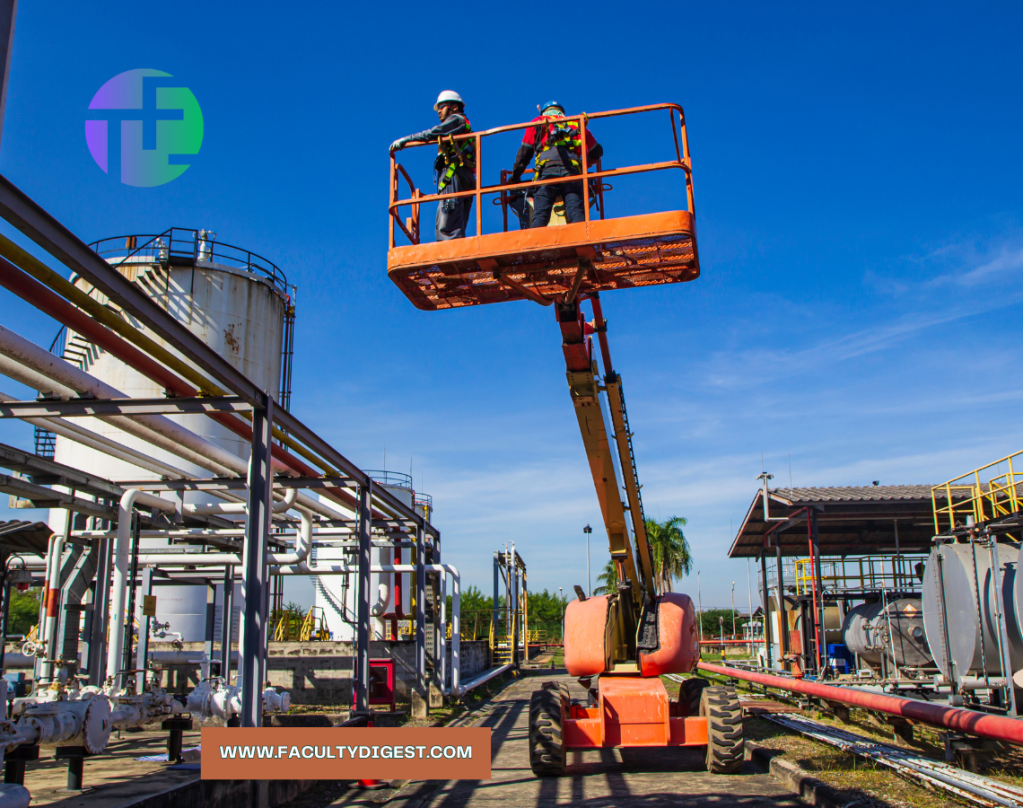
No longer just a simple platform, these are now elevated intelligence units.
Consider a scissor lift or a boom lift. It’s not just lifting you; it’s actively working to ensure your safety and optimize its function. Obstacle detection and avoidance systems are preventing collisions, while automatic leveling ensures stability on the most uneven terrain. These machines are becoming self-aware, constantly monitoring their stability and making micro-adjustments to prevent tipping.
The shift to electric and hybrid AWPs has been phenomenal, leading to quiet, emission-free operation, making them indispensable for indoor projects and noise-sensitive urban environments. Longer battery life and intelligent energy management mean less downtime for charging. And with telematics, every AWP becomes a data point, providing insights into its utilization, location, and health. Rental companies can optimize their fleets, and contractors can maximize efficiency, ensuring the right machine is always in the right place at the right time.
The last five years haven’t just seen an evolution in construction lifting; they’ve witnessed a quiet revolution. We’ve moved beyond brute strength to a synergy of power and intelligence. As we look to the future, it’s clear: the construction industry isn’t just building structures, it’s building a smarter, safer, and more sustainable world, one intelligent lift at a time.
What excites you most about this transformation – the enhanced safety, the increased efficiency, or the environmental benefits?
 The Faculty Global
Leave a comment